|
|||
|
Renewable Energy Technologies: Biomass
|
||
|
Biomass: a traditional concept for modern life
Biomass as a renewable energy source Biomass at Home Costs Advantages Disadvantages Energy Crops Agricultural Waste Fuel Suppliers What next?
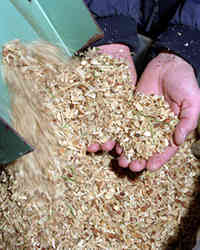
Biomass is a term for all plant and animal material. Biomass has been used as an energy source for hundreds of years. Many kinds of material can be combusted or digested to make energy. Biomass includes:
There is a wide range of technologies used to extract the energy from the agricultural products. At the most simple level, wood can be combusted in a variety of kinds of stoves to heat a home and sometimes water too. Crops including wheat and oil seed rape can be used to produce liquid fuels known as bio-diesels. Many agricultural wastes are also a useful source of energy. The first wood-fired gasification power station in Europe to use sustainable wood sources was built in Britain in North Yorkshire. Biomass as a renewable energy source Biomass can only be considered as a renewable energy if it comes from a sustainable source. Biomass is the only renewable energy source which is totally controllable. You can convert biomass into useful electricity or heat exactly when you need it. Biomass is currently the largest source of non-fossil fuel energy supply, providing 13% of primary energy demand worldwide. The majority of this demand is based in developing countries for cooking and heating. The most obvious way to make use of biomass at home is by using a wood stove. A stove is much more efficient than an open fire, and new clean burning appliances should mean that wood can be combusted even in smokeless areas. For a wood stove to be a source of renewable energy, the fuel should come from a sustainable source. The type of stove to install depends on what you want your system to do: To heat your room only, most stoves will be suitable, but it is important to ensure that the fuel and appliances used are designed for burning in an urban environment. To heat your room and provide domestic hot water and central heating you will require a stove with a boiler. Stoves with large back boilers can provide most of the hot water needed for a house as well. However, in the summer months when space heating is not required, it is best to find an alternative method for heating water, such as solar power. There are many different types of stove available. They can range price from £275 upwards, depending on the size and type of stove.
It is possible to use agricultural land for growing energy crops such as oil seed rape and short rotation willow coppices. Energy crops are different to all other renewable energy sources as they can be grown to demand. Other sources are much less controllable and need to be harnessed when and where they occur. There is, however, a debate about whether it is sensible to grow these crops. Short rotation coppicing is much like traditional forest coppicing but with shorter rotation periods and increased density of planting. Instead of growing agricultural products specifically for energy, there are a number of side products of the agricultural industry: these agricultural by-products, such as animal slurries and straw, can be used to generate energy. Examples include straw and animal droppings. Three power stations powered by poultry slurries in Britain already provide enough electricity for 122,000 homes, and consume well over half a million tonnes of poultry droppings. Unlike other renewable energy systems, biomass systems require the system owner to arrange a fuel supply. Owners of biomass installations which make use of by-products from their own land can will have access to free fuel supplies, but generally for standard wood fuel installations it will be necessary to purchase the fuel. The Logpile programme registers local suppliers and their website is searchable by postcode, click here. For further information and for fuel and stove supplier lists, contact the Green Energy Centre on: 020 8683 6683
|
||
|