|
|||


|
Solar Electricty: Photovoltaics (PV)
|
||
|
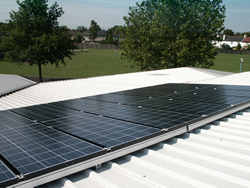
Turn your home into a power station! The Earth receives more energy from the Sun in just one hour than is used by humans worldwide in a whole year. Why not use it? This energy comes to us for free, and is now readily accessible. Photovoltaic cells convert daylight into electricity, reducing the need to exploit fossil fuels and thereby reducing the impact we have on the environment.
Why install a photovoltaic system? Installation Different Systems Grants What next? What is a Photovoltaic system? A module consists of a number of photovoltaic cells made from semi-conducting material, usually silicon. These cells convert the Sun's rays into electricity using the Photovoltaic Effect. The Photovoltaic Effect has been known since the 19th century and was developed for use in space technology and again during the oil crises of the 1970s. The silicon technology has also benefited from developments in semi-conductors for the computer industry. This page covers the use of PV to generate electricity for use in the home. Smaller systems, such as PV powered lights and fountains can be bought at large DIY stores or on the Internet. Why install a photovoltaic system? · You will be at the forefront of renewable energy developments. Home systems for generating electricity can be fitted by professional installers in as little as one day. For a list of installers accredited with the DTI grants scheme see here. The fuel (daylight) is free but the cost of the system can vary quite considerably. A typical fully installed family system can cost over £10,000. However there is a government grant available to pay for up to 50% of the cost of the system, see below for details. In addition, if integrated into roof tiles or cladding then the cost of other building materials is also saved. Is my home suitable? Building Integrated or Bolt-On? If you are improving your house you could consider a system designed into the building such as roof tiles. These systems will have shorter payback periods as you effectively only pay the difference between conventional roof tiles and solar ones. If you are not re-doing your roof, then modules mounted on the existing surface are probably the most cost effective option. On-Grid or Off-Grid? Most homes get their electricity from the National Grid, the national network for electricity distribution. Stand-alone or off-grid systems are suitable for those homes that are not connected to the Grid. These systems have a battery and an inverter and may have a wind turbine or diesel generator to satisfy peak demand. They can work out to be highly cost effective as grid connection can be very expensive.Grid-connected modules, mounted on the roof, provide electricity for the home and for selling to the Grid. No battery is needed, as the electricity is sold back to the supplier when you are not using it via an inverter which synchronises it with the mains supply. Grid connection needs an agreement with the electricity supplier and can be arranged through accredited installers. It is possible to get a net metering deal where you get paid as much for the electricity you sell/export as you pay for the electricity you buy/import. However, with some electricity companies you may find you lose out financially due to the price difference between imported and exported electricity. Crystalline or thin film cells? The most important part of a PV system is the cell. This is the part that turns the sunlight into electricity. There are two different types of cells that can be used to make up the solar panel, thin film and crystalline cells.· Thin film cells perform better in low light conditions but more surface area is needed compared to crystalline modules for the same output. · Crystalline cells which require a smaller surface area and make up 85% of the market. Costs for modules made from these different technologies are comparable. The DTI is currently offering substantial grants to help you install PV systems. These will cover up to 50% of the cost of installing PV for householders; other levels of funding are available for businesses and social housing. You will need to use an accredited installer and get two quotes in order to be eligible for a grant. For more details and an application form call 0800 298 3978 or visit their website. For more information call the Green Energy Centre on: 020 8683 6683
|
||
|