|
|||



|
Renewable Energy Technologies: Wind Power
|
||
|
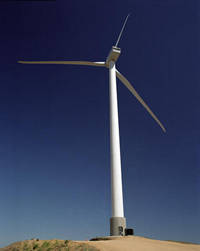
Breeze into the Renewables Sector with Wind Power Using wind power is incredibly simple. Harnessing the energy in the wind by using it to turn aerodynamic blades which rotate inside a generator (located behind the blades) which generates electricity. The UK has 40% of Europe's wind energy resource, but this currently remains largely untapped (0.5% of current electricity needs, expected to rise to 5% by 2010). Wind Turbines Individual turbines vary greatly in their power output, from a few hundred Watts (battery charging systems for boats and homes) to 2-3 Megawatts (wind farm turbines connected to the National Grid).to Small variations in wind speed can produce large changes in energy output. An 8m/s wind will produce 80% more energy than a 6m/s wind. Wind speed increases with height and it is essential that the knowledge of the local wind resource is comprehensive to maximise the potential of any give turbine. Small scale turbines are ideal for remote, off-grid locations, where conventional methods of supply are impractical or expensive. Most small systems generate a direct current (DC) and need to be connected to an inverter, to convert it to alternating current (AC). Where batteries are required, as in off-grid systems, an extra controller is required to ensure the batteries do not become over- or under-charged. It will then divert extra electricity to other systems when the batteries are fully charged (for example water heaters). Often a diesel generator is used for larger loads (for example welding) and as a back-up, offering even greater efficiency and flexibility. Grid connected systems vary only in that they have no batteries, and a different controller and inverter to ensure that electricity is produced at a quality acceptable to the grid. Surplus electricity can be exported back to the Grid and sold to the local supply company. Household and business systems range from between £5000 and £25000, including turbine, mast, inverters, storage (if required) and installation. A 6kW system can provide 12000-15000kWh or units of electricity, reducing carbon dioxide emissions by 5-7 tonnes per year. There are very few maintenance requirements with wind turbines, which have a life of up to 20 years. Battery life is around 6-10 years depending on battery type, so they will have to replaced at some time during the life of the system. Contact the Green Energy Centre on 020 8683 6683 for more information. Another useful site is the Energy Saving Trust. The British Wind Energy Association (BWEA) is a trade association of the UK wind industry.
|
||
|